
World Nomad Assistance · Travel preparation
Safety Equipment for Digital Nomads: A Practical Travel Checklist
Safety equipment for digital nomads works best when each item solves a specific problem. A charged phone helps you communicate, a small light helps you see your surroundings, and a secure way to carry essentials helps you stay organized. Start with the places you will visit and the situations you expect to encounter, then choose a compact setup you can actually use.
It is easy to collect gadgets and still leave practical questions unanswered. How will you reach your accommodation after a late arrival? Where are your emergency contact details? What happens if the device holding your travel documents disappears? A useful safety plan connects your equipment with clear actions.
On this page
Choose Safety Equipment for Digital Nomads by Situation
Picture a normal travel day from arrival to bedtime. Consider the airport transfer, the walk to your accommodation, time in a shared workspace, and any evening activities. Write down the moments when communication, visibility, access to belongings, or local information matter most.
This exercise gives your packing decisions a purpose. Instead of asking which accessory is most popular, ask what it would help you do and what its limitations are. Travel safety gear should be understandable, easy to reach, and appropriate for the route.
Safety Equipment for Digital Nomads Should Be Easy to Access
An item buried under clothing is unlikely to help when you need it quickly. Choose a consistent place for your phone, light, and important contact information. Practice finding them before you leave. If a device requires charging, add it to the same routine you use for your phone.
Avoid a setup that depends on one bag or one battery. For example, a printed accommodation address can remain useful when your phone is unavailable. Keep sensitive information limited to what you need, and store full document copies securely rather than displaying them on luggage.
Build a Small Communication and Visibility Kit
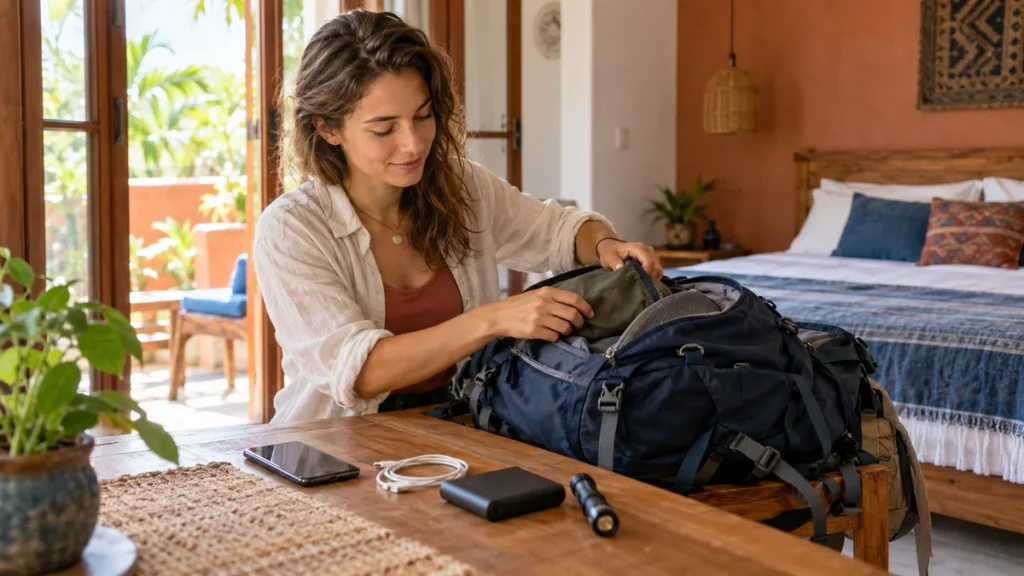
A phone that works at your destination is a practical starting point. Confirm how you will connect after arrival and save essential details offline. Add a compatible charging cable and a power bank that meets the rules of your airline and route.
A small flashlight can help during a power interruption or when finding a room entrance. Select one you know how to operate, and check it before departure. You do not need to choose a tactical product to solve an ordinary visibility problem.
Personal safety devices for travel, such as an audible alarm, may be worth considering if they suit your needs. Understand how the device is activated and stopped, check its battery, and verify relevant transport and local restrictions. It cannot guarantee that someone will hear it or respond.
Treat these items as tools for communication and awareness. If a situation feels unsafe, creating distance and seeking assistance is more important than retrieving an accessory. Your packing list should support that decision rather than encourage you to remain in a dangerous situation.
Review Your Accommodation Before Adding More Gadgets
The U.S. Department of State recommends checking lodging safety features and learning the emergency exit route. Its guidance also highlights working locks, alarms, and accessibility. Use those practical checks as a starting point when you arrive, and raise any concerns with the accommodation provider.
If you consider a portable door device, check compatibility and the property’s rules. Do not use equipment that would obstruct your own emergency exit or interfere with safety systems. Ask for a different room or accommodation when an essential security feature is not working.
Make a simple arrival routine: confirm the address, identify the reception or host contact, learn how to leave the building, and decide where you will keep essentials overnight. A repeatable routine is easier to remember than a long list of accessories that changes on every trip.
Protect Your Belongings Without Depending on a Single Device
Choose a bag you can close properly and carry comfortably. Keep valuable items under your control and avoid leaving a work setup unattended while stepping away. Think about how you would move your belongings during a transfer, rather than judging a bag only by its product description.
If you use a tracker, understand that its location information depends on the device and surrounding network. A reported location is not an instruction to confront someone or enter an unfamiliar property. Share useful information with the appropriate authorities when reporting a theft.
For computers, cables, and backup equipment, use our digital nomad equipment checklist. Plan how you would access essential files and contact work support if a device went missing. Keep the recovery instructions somewhere you can reach without that device, alongside your personal emergency contacts.
Check the Rules Before Packing Self-defense Equipment
If you are researching self defense equipment for digital nomads, check three separate issues: transport rules, entry restrictions, and possession or use at the destination. Something sold legally at home may not be permitted on your route.
For a concrete example, UK government guidance lists self-defence sprays, including pepper spray, among goods that cannot be brought into the UK. Airport permission elsewhere would not override that restriction. Check official information for each relevant country and confirm airline rules before departure.
Do not rely on a marketplace label such as travel-friendly or on another traveler’s experience passing a checkpoint. When the status of an item is uncertain, resolve the question with the relevant authority before packing it. Communication, lighting, route planning, and safe accommodation remain useful areas to address.
Turn Your Packing List into an Incident Plan
Create a digital nomad safety checklist with four actions: how to reach local emergency services, how to contact your accommodation, how to notify someone you trust, and how to access assistance details. Keep the list usable without logging into several accounts.
For WNA travelers, bookmark the emergency assistance instructions and keep the relevant voucher accessible. In an immediate emergency, seek urgent local help first. Once safe, follow the provider’s notification process and retain relevant reports or receipts when appropriate.
Before departure, review travel insurance for digital nomads alongside your personal preparation. Equipment may help you manage a situation, while the selected assistance plan addresses eligible services under its terms. Neither should be treated as a guarantee against incidents.
Questions before you go
Frequently Asked Questions
What Are 5 Essential Items for a Digital Nomad?
For a safety-focused starter kit, consider a working phone, compatible charger, permitted power bank, small flashlight, and accessible emergency contact card. This is a practical starting point rather than a universal ranking. Adapt it to your destination, accessibility needs, and the equipment you already use confidently.
What Are the Best Safety Devices to Have When Traveling?
Choose devices around the problem you need to solve: communication, lighting, alerting others, or keeping belongings organized. Ease of use and legal suitability matter more than a long feature list. Check limitations before relying on an alarm, tracker, portable lock, or other accessory.
What Are 10 Must-have Travel Essentials?
A practical preparation list includes your passport, required travel documents, payment access, phone, charger, suitable power bank, accommodation details, assistance documents, necessary personal health items, and emergency contacts. Review the list for your own trip. Health items and powered devices may require additional checks before international transport.
What Tools Do Nomads Use?
Modern digital nomads often organize travel around a laptop, phone, connectivity, charging equipment, document storage, and a work backup. From a safety perspective, the important question is whether those tools remain useful during a disruption. Keep essential details accessible when a device or internet connection is unavailable.
Can I Carry Pepper Spray on an International Trip?
Do not assume you can. Check the airline, departure and transit rules, and destination law for the exact item. The UK, for example, prohibits bringing in self-defence sprays. A permission in one country or baggage category does not establish permission throughout an international itinerary.
Are Personal Alarms Allowed Everywhere?
Do not treat any accessory as universally permitted. Check relevant rules and the device specifications before traveling, particularly if it contains a battery. Test its operation in an appropriate setting and understand its limitations. An alarm is a possible alerting tool, not a substitute for seeking help or leaving danger.
What Should I Do If My Bag or Laptop Is Stolen?
Move to a safe place, contact local authorities as appropriate, and notify your employer’s IT team if work equipment or accounts may be affected. Follow the relevant assistance or claims instructions. Keep records of the incident and any report, without attempting to recover the property through a confrontation.
